
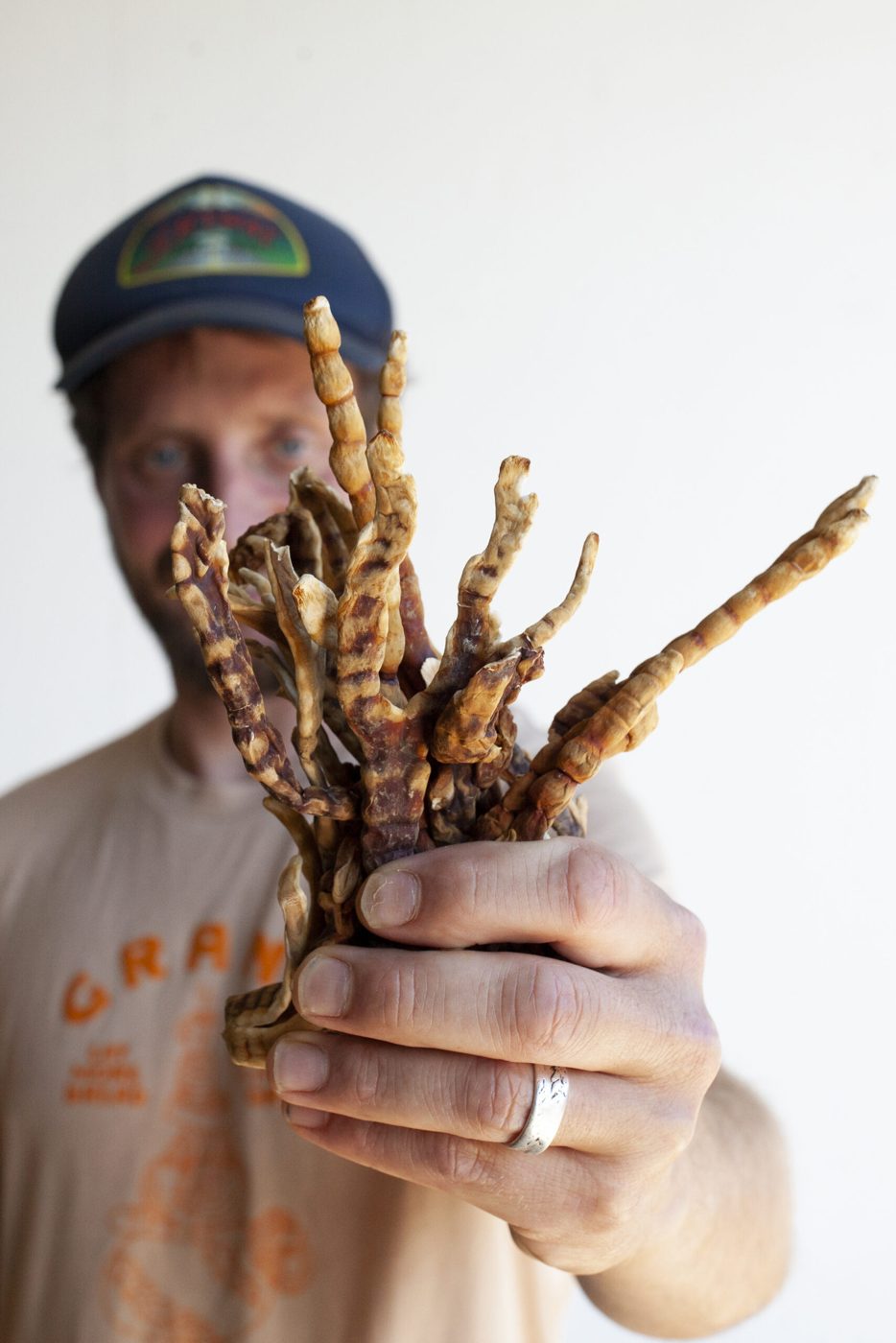
Brands often ask us what makes a spagyric tincture different from a standard tincture. The short answer is what happens after extraction. A standard tincture keeps the liquid and discards the spent plant or mushroom material. A spagyric tincture purifies the minerals from that spent material and returns them to the liquid.
Where the word comes from
Spagyric is usually traced to two Greek roots, spao, to draw out or separate, and ageiro, to gather or combine. The term is most closely linked with Paracelsus, the 16th century physician who brought alchemical methods into medicine, and apothecaries and herbalists have carried the approach forward since. The method is in the name: separate a material into its parts, purify each one, and bring them back together.
How a spagyric tincture is made
Methods vary between makers and between materials, but most follow three stages.
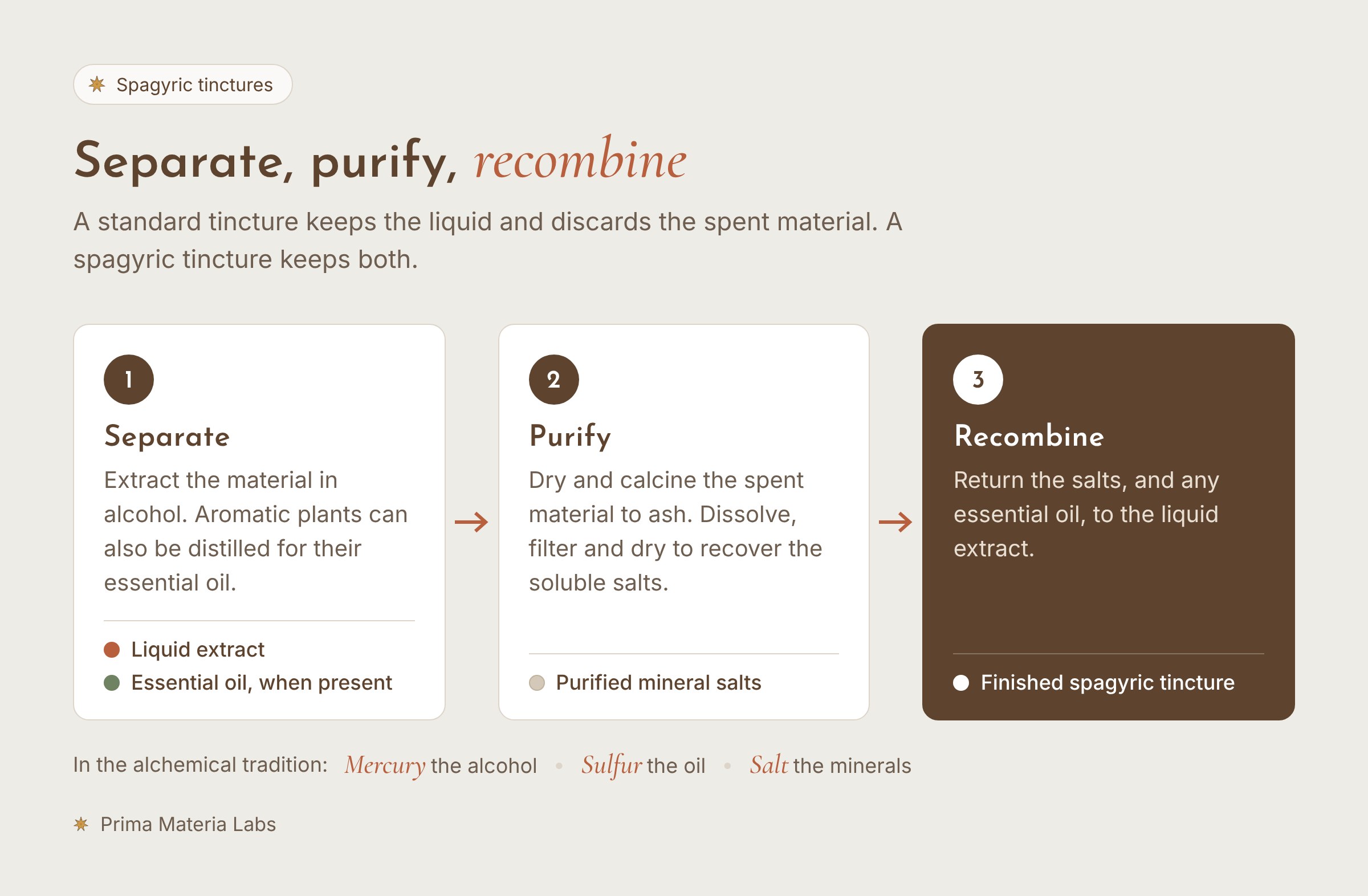
- Separate. The material is extracted, usually in alcohol, to draw out what dissolves in it. Aromatic plants can also be distilled to collect their essential oil, and some traditional methods ferment the plant first and distill the alcohol from it.
- Purify. The spent material left after extraction, called the marc, is dried and calcined, or burned down to ash. The ash is dissolved in water and filtered, and the soluble salts are recovered and purified, often through several rounds of dissolving, filtering and drying. These are largely potassium salts, the same salts that gave potash, and later potassium, its name.
- Recombine. The purified salts are returned to the liquid extract, along with any essential oil, to make the finished tincture.
In the alchemical tradition these three parts are called mercury (the alcohol), sulfur (the oil) and salt (the minerals). The names are symbolic rather than chemical, but they’re still how many practitioners describe the work.
Mushrooms yield little or no essential oil, so in a mushroom spagyric the extract and the salts carry the profile. The extraction can use hot water as well as alcohol, the same way a dual extract does. Our guide to single and dual extracts explains why that matters.
How it compares with a standard tincture
| Standard tincture | Spagyric tincture | |
|---|---|---|
| Extraction | Soaked in alcohol and water, then pressed and filtered | Same first step, sometimes with fermentation or distillation added |
| Spent material | Discarded | Calcined to ash, with the salts purified and returned |
| Essential oils | Whatever dissolves in the solvent | Can be distilled separately and added back |
| Timeline | One main stage | Several stages over a longer timeline |
A standard tincture is a well established, reliable format, and for many products it’s the right choice. A spagyric is a different process, not a correction of a standard one.
What we don’t claim
Spagyric tinctures are often described as more absorbable, more potent or more complete than standard tinctures. We don’t make those claims, because the research to support them hasn’t been done. Published chemistry on spagyric preparations is sparse, and we know of no studies comparing how the body absorbs a spagyric tincture against a standard one. The work that does exist tends to look at composition and stability. One analysis of commercial spagyric devil’s claw tinctures, for example, found little change in their main compounds between a current batch and one past its four year expiration date [1].
What we can say is what the process does. It recovers the mineral salts left behind in the spent material, which a standard tincture discards, and it gives you a method you can describe accurately on your label.
Why brands choose spagyrics
Brands usually come to spagyrics for one of three reasons:
- The tradition. Spagyric methods have a long history in Western herbalism and alchemy, and for brands rooted in that history, the method itself matters.
- The whole material. The spent material isn’t simply thrown out. It becomes the salts that go back into the tincture.
- A process you can describe. Each stage is a real step with a batch record behind it, so what you say about the product is specific and true.
It takes longer and costs more than a standard tincture, so it fits best where the method is part of what the product is.
Working with us
We make spagyric tinctures alongside single and dual extracts, standard tinctures and solid concentrates, for private label and bulk. The details of the method depend on the material, so we’ll talk through what makes sense for yours. Our capabilities page covers the full range, or tell us about your project and we’ll reply within 2 to 3 business days.
References
- Avato P, Argentieri MP. Quality assessment of commercial spagyric tinctures of Harpagophytum procumbens and their antioxidant properties. Molecules. 2019;24(12):2251. https://doi.org/10.3390/molecules24122251